by Critters Pet Shop of South Elgin | Sep 17, 2026 | Adoptions Tips & Suggestions
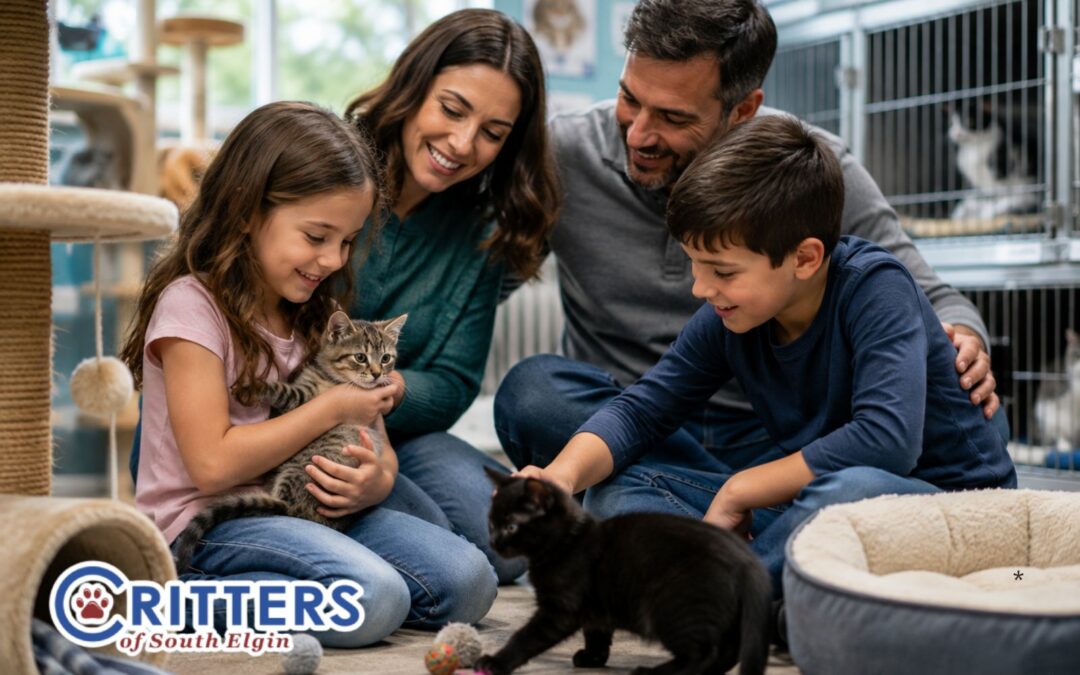
Bringing home a new cat is an exciting experience, but finding the right feline companion involves more than simply choosing the cutest face. Every cat has a unique personality, energy level, and care requirements. Taking the time to choose a cat that fits your family’s lifestyle can lead to a happier pet and a stronger bond for years to come. At Critters Pet Shop, we believe every successful adoption starts with finding the right match between a cat and its new family.
Consider Your Family’s Lifestyle
Before adopting a cat, think about what your daily routine looks like.
Ask yourself:
- Are you home most of the day?
- Do you have young children?
- Do you already have other pets?
- Are you looking for a playful kitten or a calm adult cat?
- How much time can you dedicate to play and interaction?
Answering these questions can help narrow down which type of cat will fit best into your home.
Kittens vs. Adult Cats
One of the biggest decisions adopters make is whether to bring home a kitten or an adult cat.
Why Choose a Kitten?
Kittens are playful, curious, and full of energy. They enjoy exploring, learning, and interacting with their families.
Kittens are a great choice for families who have time for:
- Frequent play sessions
- Training and socialization
- Regular supervision
- Lots of patience during the growing stage
Keep in mind that kittens require more attention and may take time to develop consistent routines.
Why Choose an Adult Cat?
Adult cats often have established personalities, making it easier to find one that matches your household.
Many adult cats are:
- Already litter box trained
- More relaxed
- Less destructive
- Easier to match with your lifestyle
Adult cats also make wonderful companions and are often overlooked despite having so much love to give.
Personality Matters More Than Appearance
While it’s easy to fall in love with a beautiful coat color or striking eyes, personality should play an even bigger role in your decision. Some cats are outgoing and social, while others are quiet and independent. When meeting adoptable cats, spend time interacting with them. Watch how they respond to people, toys, and new environments. The goal is to find a personality that complements your family.
Prepare Your Home Before Adoption
Before bringing your new cat home, make sure you have the essentials ready.
Your New Cat Will Need
- Litter box and litter
- Food and water bowls
- Premium cat food
- Comfortable bed
- Scratching post
- Toys for enrichment
- Safe hiding places
- Cat carrier
Preparing your home ahead of time helps reduce stress during the transition.
Give Your New Cat Time to Adjust
Moving into a new home can feel overwhelming for any cat. Some cats settle in within a few days, while others may need several weeks to feel completely comfortable. Allow your cat to explore at their own pace and avoid forcing interactions. Patience and consistency will help build trust. Before long, your new companion will begin to feel right at home.
Visit Critters Pet Shop to Meet Your New Best Friend
Whether you’re looking for a playful kitten or a relaxed adult cat, Critters Pet Shop is here to help you find the perfect feline companion. Our knowledgeable team takes the time to learn about your family and introduce you to adoptable cats that match your lifestyle and expectations. We also carry premium cat food, toys, scratching posts, treats, and everything you’ll need to help your new family member thrive.
Find the Perfect Cat for Your Family
Adopting a cat is one of the most rewarding decisions you can make. By choosing a cat whose personality and needs fit your family, you’ll build a lifelong friendship based on trust, love, and companionship. Visit Critters Pet Shop in South Elgin to meet our adoptable cats and let us help you find the perfect feline companion. Your new best friend may be waiting for you.

by Critters Pet Shop of South Elgin | Jul 30, 2026 | Adoptions Tips & Suggestions
When people think about pet adoption, they often focus on the animal receiving a new home. While that is certainly true, adoption is about much more than giving a pet a place to live. Every adoption changes two lives: the life of the pet and the life of the person who welcomes them home.
At Critters Pet Shop, we see these life-changing connections happen every week. Watching a pet find a loving family is one of the most rewarding parts of what we do.
A Second Chance for the Pet
Many adoptable pets come from difficult situations. Some have been surrendered by owners who could no longer care for them. Others have been rescued from neglect, abandonment, or uncertain circumstances. When a pet is adopted, they are given something every animal deserves: a safe, loving home.
For the pet, adoption means:
- Consistent care and nutrition
- Safety and security
- Daily companionship
- A chance to thrive
- A family to call their own
For many animals, adoption truly is a fresh start.
The Benefits for Pet Owners
The rewards of adoption extend far beyond helping an animal in need. Pets provide companionship, comfort, and unconditional love. Studies have shown that spending time with pets can help reduce stress, encourage physical activity, and improve overall well-being. Many adopters are surprised by how much their new pet positively impacts their daily life.
Pets can:
- Provide emotional support
- Reduce feelings of loneliness
- Encourage routine and responsibility
- Bring laughter and joy into the home
- Create lasting memories
Whether it is a cat greeting you at the door, a guinea pig squeaking for treats, or a rabbit hopping over to say hello, pets have a special way of becoming part of the family.
Every Adoption Creates More Opportunities
When a pet is adopted, it also opens space and resources for another animal in need. Every successful adoption helps rescue organizations, shelters, and pet stores continue their mission of helping more animals find loving homes. One adoption can have a ripple effect that benefits multiple pets and families within the community.
Finding the Right Match Matters
Adoption is not simply about choosing a pet based on appearance. It is about finding the right fit for your lifestyle, experience level, and family. That is why the team at Critters Pet Shop takes time to help match adopters with pets that fit their homes and personalities. The goal is to create a lifelong bond that benefits both the pet and the adopter.
The Start of Something Special
The day you adopt a pet is often remembered forever. It marks the beginning of a relationship built on trust, companionship, and love. For the pet, it means a second chance. For the adopter, it means gaining a loyal friend who will bring joy for years to come. That is why adoption changes two lives, not just one.
Thinking about adding a furry, feathered, or scaly friend to your family? Visit Critters Pet Shop in South Elgin and meet our adoptable pets. Your perfect companion may be waiting for you, and together, you can start a brand-new chapter.

by Critters Pet Shop of South Elgin | Jun 4, 2026 | Adoptions Tips & Suggestions
Summer is one of the best times of the year to welcome a new pet into your family. With longer days, warmer weather, and more flexible schedules, many families find it easier to help a new companion adjust to their forever home during the summer months. Whether you are considering a dog, cat, guinea pig, rabbit, or another small animal, summer provides the ideal environment to build strong bonds and establish healthy routines from the very beginning.
More Time to Bond With Your New Pet
One of the biggest advantages of summer pet adoption is having more time together. Children are often out of school, and many families have additional flexibility in their schedules. This extra time allows new pets to adjust gradually while building trust with their owners.
Creating consistent routines for feeding, exercise, playtime, and training early on helps reduce stress and creates a smoother transition into their new home.
Warmer Weather Makes Adjustment Easier
Summer weather provides more opportunities for pets to explore and become comfortable in their surroundings. Dogs benefit from outdoor walks and exercise, while small animals can enjoy supervised enrichment activities in safe environments.
The warmer temperatures also make transportation less stressful compared to colder winter months, helping pets arrive at their new homes more comfortably.
A Great Opportunity to Teach Responsibility
Adopting a pet during the summer gives children an excellent opportunity to learn responsibility. Kids can help with feeding schedules, habitat cleaning, grooming, exercise, and daily care routines.
These hands-on experiences teach valuable life skills while helping children develop compassion, patience, and a strong bond with their new pet.
Choosing the Right Pet for Your Family
Before adopting, it is important to consider your family’s lifestyle and the type of pet that best fits your home. Every animal has unique needs when it comes to nutrition, housing, exercise, socialization, and enrichment.
Taking the time to ask questions and learn about different species can help ensure a successful adoption experience for both the pet and your family.
Find Your New Best Friend at Critters Pet Shop & Rescue
At Critters Pet Shop & Rescue, we believe every animal deserves a loving home. Our knowledgeable team is here to help match families with the right pet while providing guidance, education, and support throughout the adoption process.
Whether you are looking for a playful kitten, a friendly guinea pig, a rabbit, or another companion animal, we are committed to helping you find the perfect addition to your family.
Start Your Adoption Journey This Summer
If you have been thinking about adding a furry friend to your household, summer may be the perfect time to make it happen. Visit Critters Pet Shop to meet our adoptable pets and discover why so many families choose adoption as the first step toward finding a lifelong companion.

by Critters Pet Shop of South Elgin | May 7, 2026 | Adoptions Tips & Suggestions
There is absolutely nothing quite like bringing a rescue dog or cat home. You’ve opened your door (and your life) to a creature who’s been waiting, sometimes for a very long time, for exactly this moment. However, getting that relationship started on the right foot is important for everything that comes afterward.
Start Very Slow
Your instinct is to introduce your new dog or cat to everything at once. Resist it. What a rescue needs most at first is to feel that they’re safe. Give them a little space with their bed, some water, maybe a little food, and a few items that smell familiar. Let them explore the area at their own pace.
Give Them Time
A lot of rescues come from difficult environments. That might be an abusive home, but it also might just be years spent in a shelter. When your new pet goes quiet or hides behind the couch, it’s not personal.
Follow the “3-3-3 rule”. It takes three days for a rescue to decompress, three weeks to start learning your household routines, and three months to really start to feel at home. You can’t rush any of these phases.
Introduce the Household Slowly
Make sure to introduce the other members of your household slowly. Adults should greet your new addition one at a time. Kids need to meet them calmly. Let your new dog or cat approach people on their own terms. Crouch down, don’t make eye contact, and let them smell you. If you have other pets, don’t make direct contact at first. Let them sense one another from behind a closed door and then slowly increase contact.
Your Rescue Needs Routine
Chaos is kind of the rule for most rescues. For your new addition to really get comfortable, you need to start building a routine right away. Stick to a set feeding time, go for walks around the same time every day, and be as consistent as you can when it comes to your own schedule.
Watch for Stress
Watch your rescue’s appetite, energy, and behavior in those early weeks. Hiding, excessive panting, not eating, or unusual reactivity are signs of stress. If something doesn’t feel right, check in with your vet.
Bringing a rescue home is the beginning of an amazing story. Give it the start it deserves, and both of you will be better for it.
Want to set your new rescue up for success? Stop by Critters Pet Shop or get in touch. We’re happy to help.