
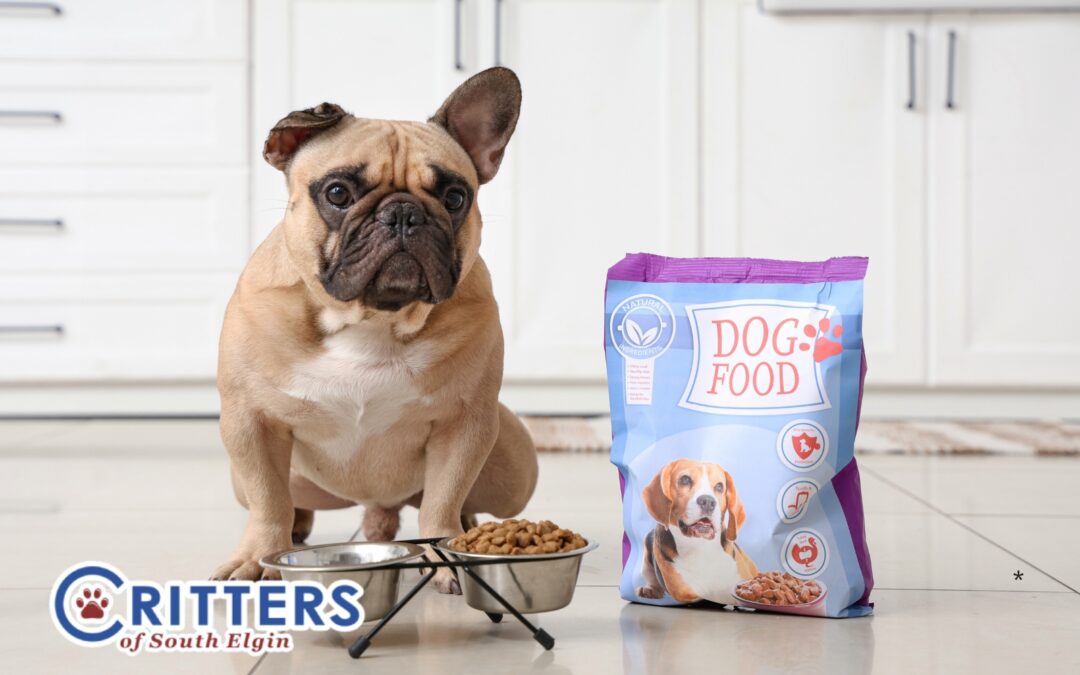
Tired of standing in the pet food aisle and wondering which food is right for your pet? You’re not alone. Today’s pet food packaging is designed to sell you, not to explain why it’s good for your pet. That’s particularly true when it comes to premium pet food labels. And, unfortunately, the most appealing labels sometimes get applied to foods with the lowest level of nutrition. The good news is that finding healthy food for your pet doesn’t have to be stressful or confusing.
Step 1: Start with the “Statement of Nutritional Adequacy”
This is the most underrated line on the bag. Look for language that says the food is complete and balanced for a specific life stage (growth, adult maintenance, all life stages, etc.). It’s often tied to AAFCO feeding standards.
Remember, “premium” doesn’t automatically mean balanced. Pet food can have great-sounding ingredients and still be missing key nutrients if it’s meant only as a topper or supplemental feeding.
Step 2: Read the Ingredient List
Ingredients are listed by weight before cooking. That means moisture-heavy ingredients (like fresh meats) can appear higher on the list than you’d expect, even if the final protein contribution isn’t as dramatic as the front of the bag implies.
- Named proteins (like chicken, turkey, beef, or salmon) are clearer than vague terms.
- If your pet has sensitivities, keep an eye out for repeats (multiple starches, etc.).
Step 3: Skip on Buzzwords
Some common front-of-bag phrases are mostly marketing unless the label backs them up:
- “Natural” (this really means nothing)
- “Holistic” (there is no formal standard)
- “Human-grade” (should be supported by specific manufacturing claims)
- “Grain-free” (not inherently better; it depends on your pet)
Step 4: Use the Guaranteed Analysis for Comparisons
Guaranteed Analysis (GA) gives minimums/maximums for protein, fat, fiber, and moisture. It’s helpful, but it’s everything you need to know, especially when you compare wet vs. dry vs. freeze-dried. If you’re comparing two very different formats, ask about “dry matter basis,” so you’re comparing apples to apples.
Step 5: Match the Food to Your Actual Pet
The “best” food is the one your pet does well on. Consider:
- Age and activity level
- Stool quality and coat condition
- Food sensitivities
- How picky they are (yes, that counts)
- Medical issues (and your vet’s advice)
Want a Second Opinion in the Confused by pet food labels? Learn how South Elgin pet owners can choose the right food by reading labels the smart way.Aisle?
At Critters Pet Shop of South Elgin, you’ll find a wide range of quality brands and food types to fit different pets and budgets. If you don’t see your preferred brand, we’ll even special order it. Get in touch for more information.