
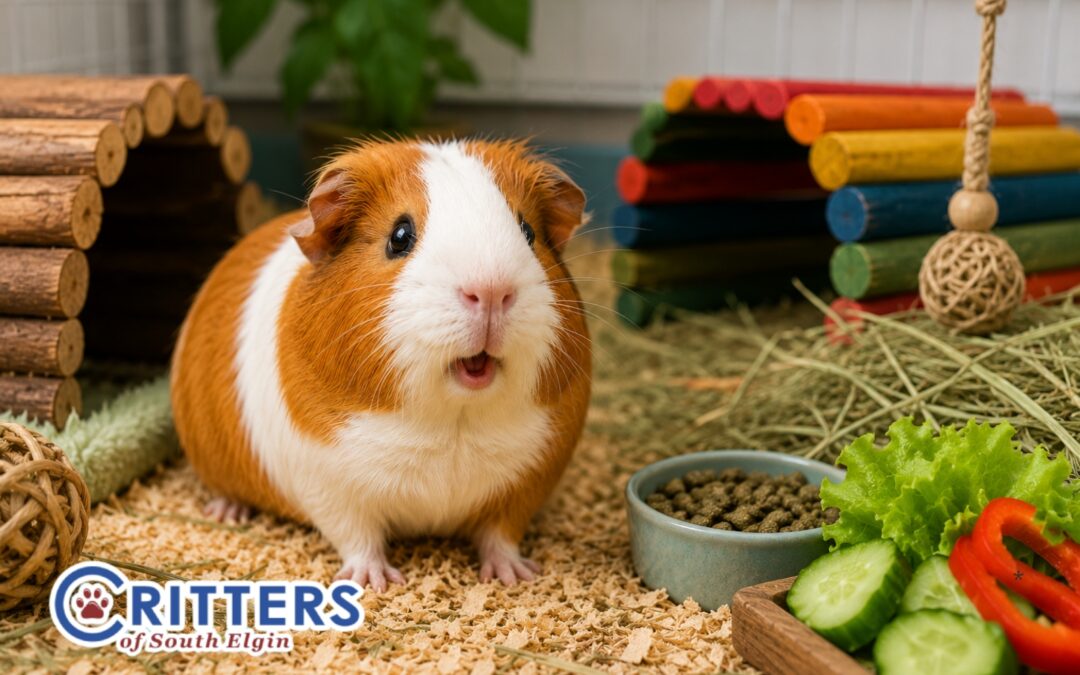
Understanding Your Guinea Pig’s Behavior: What Those Sounds Really Mean
Guinea pigs may be small, but they are surprisingly vocal pets. Unlike many small animals, guinea pigs use a variety of sounds to communicate their feelings, needs, and excitement.
For new guinea pig owners, all those squeaks, chirps, and rumbles can be confusing at first. Learning what these sounds mean can help you better understand your pet and build a stronger bond. Here are some of the most common guinea pig sounds and what they are trying to tell you.
Wheeking: “I’m Excited!”
One of the most recognizable guinea pig sounds is wheeking. This loud, high-pitched squeal often happens when your guinea pig hears a bag crinkle, the refrigerator door open, or sees you approaching with food.
Wheeking usually means:
- Excitement
- Anticipation
- Hunger
- Happiness
Many guinea pigs quickly learn their feeding routines and will happily wheek to remind you it is time for a snack.
Purring: It Depends on the Situation
Purring can have different meanings depending on the sound and your guinea pig’s body language. A soft, gentle purr often indicates contentment and relaxation. You may hear this while petting your guinea pig or when they are comfortable in their environment. A deeper, tense purr may signal irritation or discomfort. If accompanied by stiff body posture, your guinea pig may be telling you they want some space. Pay attention to the context to determine which type of purring you are hearing.
Chattering Teeth: “Back Off”
If your guinea pig starts rapidly chattering their teeth, it is usually a warning sign.
Teeth chattering often means:
- Annoyance
- Fear
- Territorial behavior
- Stress
This sound is commonly heard when guinea pigs are establishing dominance or when they feel threatened.
If you hear teeth chattering, it is best to give your guinea pig some time to calm down.
Rumble Strutting: Showing Off
Rumble strutting is a low rumbling sound paired with a slow swaggering walk.
This behavior is most often seen when guinea pigs are:
- Establishing dominance
- Trying to impress another guinea pig
- Feeling confident
While it can look funny, it is a normal part of guinea pig social behavior.
Chirping: The Mystery Sound
One of the rarest guinea pig sounds is chirping. It sounds surprisingly similar to a bird singing and often catches owners completely off guard. Experts still do not fully understand why guinea pigs chirp, but it is believed to be related to stress, communication, or environmental changes. Fortunately, chirping is uncommon and usually nothing to worry about.
Understanding Your Guinea Pig Better
The more time you spend with your guinea pig, the easier it becomes to recognize their unique personality and communication style. Listening to their sounds and observing their body language helps you understand when they are happy, hungry, nervous, or simply looking for attention.
Thinking about adding a guinea pig to your family or looking for supplies for your current pet? Visit Critters Pet Shop in South Elgin to explore our selection of small animal products and meet some adorable furry friends.