by Critters Pet Shop of South Elgin | Jul 15, 2026 | Cat Tips & Suggestions
While many people enjoy spending more time outdoors during the summer, indoor cats often experience the opposite. As family routines change and windows stay closed to keep the heat out, some cats may become bored, restless, or less active.
Just like people, cats need physical exercise and mental stimulation to stay healthy. Providing enrichment opportunities can help prevent unwanted behaviors and keep your feline friend happy all summer long.
Create Opportunities for Play
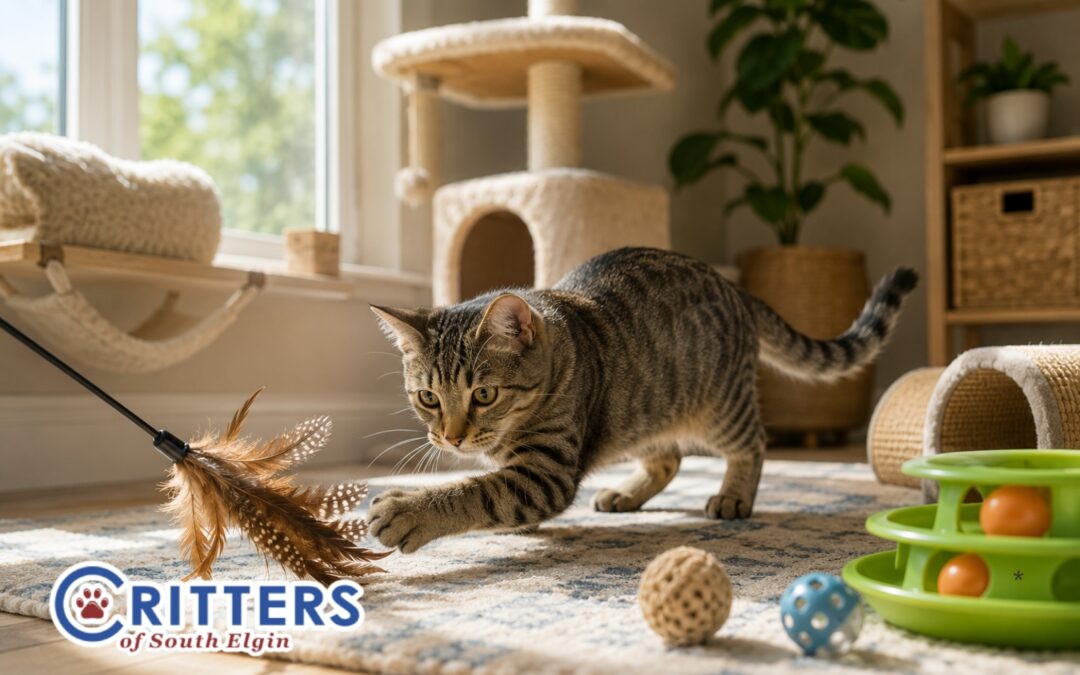
Playtime is one of the easiest ways to keep indoor cats active. Interactive toys that mimic prey can trigger your cat’s natural hunting instincts and encourage exercise. Wand toys, feather teasers, and small balls can turn a few minutes of play into a valuable workout. Try rotating toys every week to keep things interesting. Cats often lose interest in toys they see every day, but a simple rotation can make old favorites feel new again. Even 10 to 15 minutes of active play each day can help burn energy and prevent boredom.
Take Advantage of Vertical Space
Cats naturally enjoy climbing, observing, and exploring from above. Adding cat trees, shelves, window perches, or climbing towers gives your cat more opportunities to move throughout the day. Vertical spaces also provide a sense of security and allow cats to observe their surroundings from a comfortable vantage point. Many indoor cats become more active when they have access to multiple levels within their environment.
Make Mealtime More Engaging
Food can be a great source of enrichment when used creatively. Instead of simply placing food in a bowl, consider puzzle feeders or treat-dispensing toys. These encourage your cat to work for their food and provide mental stimulation while slowing down fast eaters. You can also hide small portions of treats around the house and let your cat “hunt” for them. These activities mimic natural behaviors and help keep cats engaged.
Provide Window Entertainment
Cats love watching the world outside. A comfortable perch near a window can provide hours of entertainment as your cat observes birds, squirrels, and neighborhood activity. Some owners even place bird feeders outside visible windows to create a safe and engaging “cat TV” experience. Just be sure the window area remains cool and comfortable during hot summer afternoons.
Don’t Forget Mental Stimulation
Physical exercise is important, but mental enrichment matters too. Training sessions, interactive toys, scratching posts, and new experiences help challenge your cat’s brain and reduce boredom. Even simple changes like introducing a new toy, cardboard box, or cat tunnel can provide valuable stimulation.
A Happy Cat Is an Active Cat
Keeping your indoor cat entertained during the summer does not have to be complicated. A combination of play, climbing opportunities, puzzle activities, and environmental enrichment can help your cat stay active, healthy, and happy.
Looking for new ways to spoil your cat this summer? Visit Critters Pet Shop in South Elgin for toys, treats, cat trees, and enrichment products that help keep indoor cats active and entertained. 🐱🐾
by Critters Pet Shop of South Elgin | Jul 9, 2026 | Reptile
Many people assume reptiles love hot weather because they are cold-blooded animals. While reptiles do rely on external heat sources to regulate their body temperature, excessive heat can be just as dangerous as temperatures that are too cold.
As summer temperatures rise, reptile owners need to pay close attention to their pet’s environment. Proper heat, humidity, and habitat management are essential for keeping reptiles healthy and comfortable throughout the season.
Monitor Temperatures Carefully
One of the biggest mistakes reptile owners make during summer is assuming the enclosure temperature will remain stable. Warmer outdoor temperatures can cause terrariums and reptile habitats to become hotter than intended. This is especially true if the enclosure is near a window or receives direct sunlight. Use reliable thermometers on both the warm and cool sides of the habitat. This allows you to monitor the temperature gradient and ensure your reptile can properly regulate its body temperature.
Signs of overheating may include:
- Excessive hiding
- Lethargy
- Open-mouth breathing
- Loss of appetite
If you notice these symptoms, check enclosure temperatures immediately.
Don’t Forget About Humidity
Humidity is just as important as temperature for many reptile species. Different reptiles have different requirements. Tropical species often need higher humidity levels, while desert reptiles require much drier conditions. Summer air conditioning can sometimes lower humidity levels indoors, making it difficult to maintain the proper environment. A hygrometer is a valuable tool for measuring humidity accurately. Depending on your reptile’s needs, you may need to:
- Mist the enclosure
- Add moisture-retaining substrate
- Provide a humid hide
- Increase ventilation if humidity becomes too high
Maintaining the correct humidity helps support healthy shedding, respiratory health, and overall well-being.
Create a Proper Habitat Setup
A well-designed habitat gives reptiles the ability to choose where they feel most comfortable.
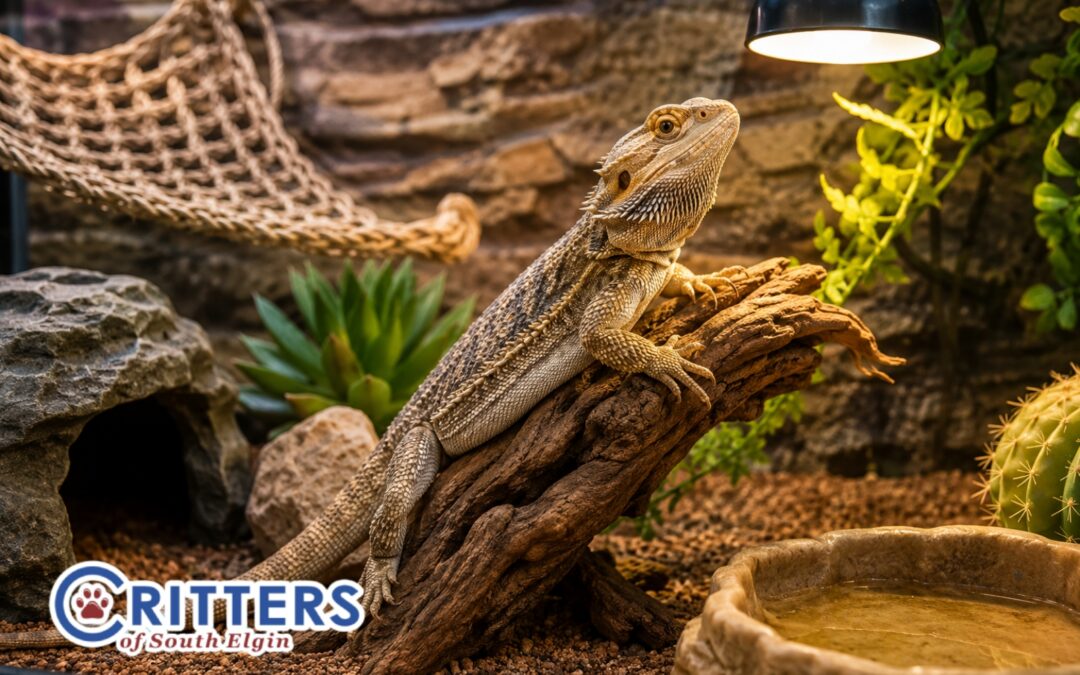
Every enclosure should include:
- A basking area
- A cooler retreat area
- Proper UVB lighting when required
- Hiding spots
- Fresh water
Providing a temperature gradient allows reptiles to move between warmer and cooler areas as needed throughout the day. Enrichment items such as branches, climbing structures, and natural décor can also encourage healthy behaviors and reduce stress.
Watch for Shedding Issues
Summer growth and increased activity can sometimes lead to more frequent shedding. Incomplete sheds are often linked to improper humidity levels. If you notice retained skin around the toes, tail, or eyes, it may be time to reevaluate your habitat conditions. Proper hydration and humidity are key factors in successful shedding.
Keep Your Reptile Thriving All Summer Long
Reptiles can thrive during the summer months when their environment is properly maintained. Monitoring temperature, managing humidity, and creating a habitat that meets your pet’s specific needs will help keep them healthy and stress-free.
At Critters Pet Shop, we carry reptile supplies, habitat accessories, lighting, substrates, and nutrition products to help reptile owners provide the best care possible. Whether you’re a first-time reptile owner or an experienced enthusiast, our team is always happy to help. 🦎🐍
Need help setting up the perfect reptile habitat? Stop by Critters Pet Shop in South Elgin for expert advice, quality reptile supplies, and everything your scaly friend needs to stay healthy this summer. 🐾
by Critters Pet Shop of South Elgin | Jun 30, 2026 | Tips & Suggestions
Summer is one of the most popular times for family vacations, road trips, and weekend getaways. For many pet owners, that means bringing their furry family members along for the ride. Traveling with pets can be a wonderful experience, but preparation is key. Having the right supplies on hand helps keep your dog or cat comfortable, safe, and stress-free throughout the trip. Here are some essentials every pet owner should pack before hitting the road.
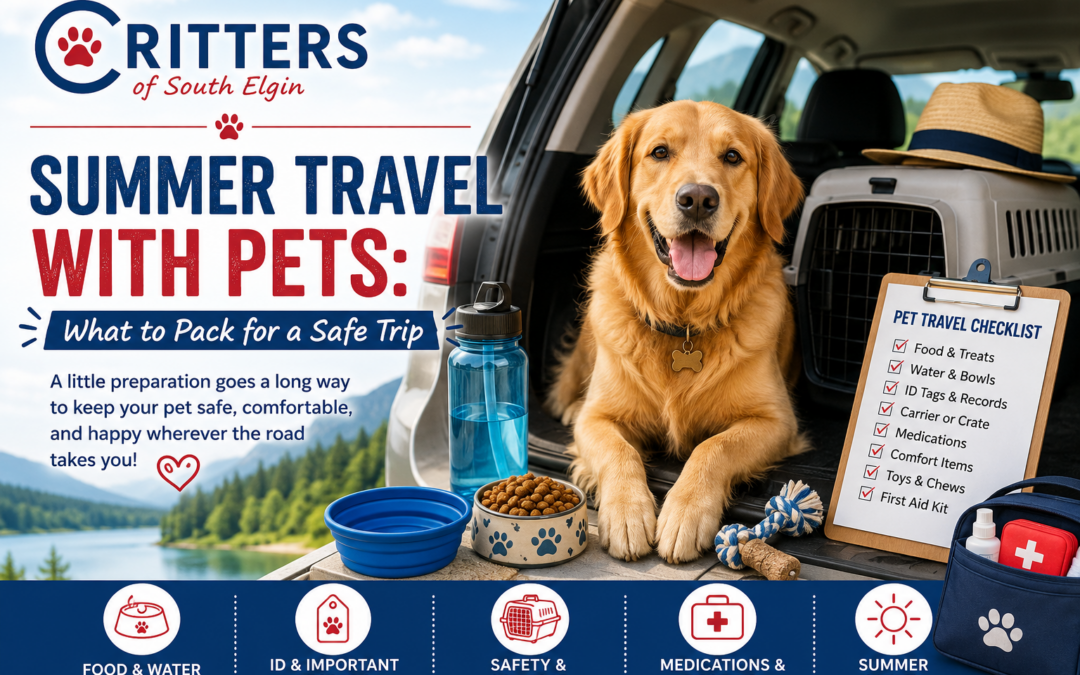
Food and Fresh Water
One of the biggest mistakes pet owners make is assuming they can easily find their pet’s regular food while traveling. Bring enough of your pet’s usual food for the entire trip, plus a little extra in case of delays. Sudden diet changes can cause digestive upset, which is the last thing you want while traveling.
Don’t forget:
- Food bowls
- Water bowls
- Bottled water or a portable water container
- Favorite treats
Keeping your pet on their normal feeding schedule can also help reduce travel stress.
Identification and Important Records
Before leaving home, make sure your pet’s identification tags are current and easy to read.
It’s also a good idea to bring:
- Vaccination records
- Microchip information
- Contact information for your veterinarian
- Emergency veterinary contacts at your destination
If your pet gets lost, updated identification greatly increases the chances of a safe reunion.
Travel Carriers and Safety Equipment
Safety should always be a top priority. Cats should travel in secure carriers, while dogs should be restrained using a crash-tested harness or travel crate. Allowing pets to roam freely in the vehicle can be dangerous for both the pet and passengers. Comfort items inside carriers can also help reduce anxiety during longer trips.
Comfort Items From Home
Travel introduces new sights, sounds, and smells that can make pets nervous. Bringing familiar items can help them feel more secure.
Consider packing:
- Favorite blankets
- Beds
- Toys
- Chews
- Familiar treats
A little piece of home can make a big difference.
Medications and First Aid Supplies
If your pet takes medication, pack enough for the entire trip and bring extra if possible.
A basic pet travel kit should include:
- Medications
- Bandages
- Gauze
- Pet-safe wipes
- Tick removal tool
- Emergency contact numbers
Being prepared can save valuable time if an unexpected situation arises.
Don’t Forget Summer Safety
Summer temperatures can become dangerous quickly. Never leave your pet unattended in a parked vehicle, even for a few minutes. Make frequent water breaks a priority and watch for signs of overheating, especially during outdoor activities.Planning ahead helps ensure everyone enjoys the trip safely.
Make Travel Easier for You and Your Pet
Traveling with pets can create incredible memories when you’re properly prepared. Packing the right supplies helps keep your dog or cat comfortable and allows you to focus on enjoying your adventure together.
Before your next trip, stop by Critters Pet Shop in South Elgin. We carry travel essentials, premium pet food, treats, carriers, and supplies to help make every journey a safe and happy one. 🐾

by Critters Pet Shop of South Elgin | Jun 24, 2026 | Pet Food
Pet owners today are paying more attention than ever to what goes into their pets’ food. As a result, freeze-dried pet food has become one of the fastest-growing trends in pet nutrition. More pet parents are choosing freeze-dried diets and treats because they offer high-quality ingredients, excellent nutrition, and a convenient way to feed their pets.
At Critters Pet Shop of South Elgin, we frequently hear questions from customers about freeze-dried foods and why they have become so popular. Understanding the benefits can help you decide whether this feeding option is right for your pet.
What Is Freeze-Dried Pet Food?
Freeze-dried pet food begins with fresh ingredients that are frozen and then placed through a specialized process that removes moisture while preserving much of the food’s original nutritional value. Unlike traditional kibble, which is cooked at high temperatures, freeze-drying helps retain natural proteins, vitamins, minerals, and flavor.
The result is a shelf-stable food that closely resembles a raw diet while offering greater convenience and easier storage.
Why Pet Parents Are Making the Switch
One of the biggest reasons pet owners choose freeze-dried food is ingredient quality. Many freeze-dried products feature real meat as the primary ingredient and contain fewer fillers, artificial preservatives, and unnecessary additives.
Benefits often include:
- High-quality protein sources
- Enhanced taste and aroma
- Minimal processing
- Easy storage and serving
- Great meal toppers for picky eaters
- Nutrient-rich training treats
Many pet owners find that dogs and cats become more excited about mealtime when freeze-dried food is added to their daily routine.
Supports a More Natural Diet
Many freeze-dried foods are designed to mimic the type of diet animals would naturally eat. Because the ingredients undergo less processing than traditional kibble, pet parents often view freeze-dried foods as a more natural feeding option.
While every pet has different nutritional requirements, freeze-dried foods can be a great addition to a balanced diet when selected appropriately.
Is Freeze-Dried Food Right for Your Pet?
Every pet is unique. Factors such as age, activity level, health conditions, and dietary sensitivities should be considered before making any significant changes to your pet’s diet.
Some pet owners use freeze-dried food as a complete meal, while others use it as a topper to boost nutrition and flavor. Freeze-dried treats are also popular for training and rewarding good behavior.
Find Quality Pet Nutrition at Critters Pet Shop of South Elgin
Choosing the right food can feel overwhelming with so many options available. At Critters Pet Shop of South Elgin, our knowledgeable team can help you explore freeze-dried foods, treats, and other premium nutrition options for your pets.
Whether you’re feeding a dog, cat, rabbit, guinea pig, or another companion animal, we’re here to help you find products that support a healthy, happy life. Stop by our store to learn more about freeze-dried nutrition and discover why so many pet parents are making the switch.

by Critters Pet Shop of South Elgin | Jun 18, 2026 | Tips & Suggestions
Summer is a great time to enjoy the outdoors with your dog, but rising temperatures can create hidden dangers that many pet owners overlook. One of the biggest risks during the hottest months of the year is hot pavement. Sidewalks, asphalt, and even artificial turf can become dangerously hot and cause painful burns to your dog’s paw pads in just a matter of seconds.
Understanding how to protect your dog’s paws during summer walks can help prevent injuries and keep your furry friend safe and comfortable.
How Hot Is Too Hot?
When the air temperature reaches 85°F, pavement temperatures can easily exceed 130°F. On especially sunny days, black asphalt can become even hotter. At these temperatures, your dog’s paw pads can burn, blister, or crack after only a short period of exposure.
A simple way to test the pavement is the “seven-second rule.” Place the back of your hand on the pavement for seven seconds. If it is too hot for your hand, it is too hot for your dog’s paws.
Signs of Paw Pad Burns
After a walk, check your dog’s paws for signs of injury, including:
- Limping or refusing to walk
- Excessive licking or chewing of the feet
- Redness or discoloration
- Blisters on the paw pads
- Cracked, peeling, or damaged skin
If you notice any of these symptoms, contact your veterinarian for guidance and treatment.
Tips for Safe Summer Walks
The easiest way to avoid hot pavement injuries is to adjust your walking schedule. Early morning and evening walks are often much cooler than midday outings.
You can also:
- Walk on grass whenever possible
- Choose shaded trails and parks
- Use dog booties designed for hot weather
- Apply paw protection balms recommended for pets
- Bring water to keep your dog hydrated during walks
Remember that some dogs, especially seniors, puppies, and breeds with shorter noses, may be more sensitive to heat and require extra precautions.
Don’t Forget Paw Care at Home
Summer paw protection doesn’t stop after the walk. Regularly inspect your dog’s paws for cuts, cracks, or debris that may become trapped between the toes. Keeping nails properly trimmed can also improve comfort and reduce strain on the feet.
If your dog spends time outdoors in your backyard, be mindful of decks, patios, and artificial turf, which can become just as hot as sidewalks and driveways.
Keep Summer Adventures Safe
Warm weather should be fun for both you and your dog. By paying attention to pavement temperatures and taking a few simple precautions, you can help prevent painful paw injuries and enjoy safer summer walks together.
If you have questions about paw care, dog supplies, or summer pet safety, stop by Critters Pet Shop. Our team is always happy to help you find the products and advice you need to keep your pets healthy all season long.